


When Osmose's keybed is exposed to heavy vibrations or impacts during transport, for example, when its box is tipped over from an upright position, it can happen that one or several keys get dislocated from their regular position. Here's an example of how this may look:

In the vast majority of cases, the keys can be put back into their regular position without this negatively affecting the keybed's longevity.
Reposition white keys that have their spring still in place
White keys tend to dislocate more easily, so they are affected by this issue far more often than black keys. If at their rear end, they still seem to be connected to the keybed with their spring, you should be able to put them back in place within a few seconds:
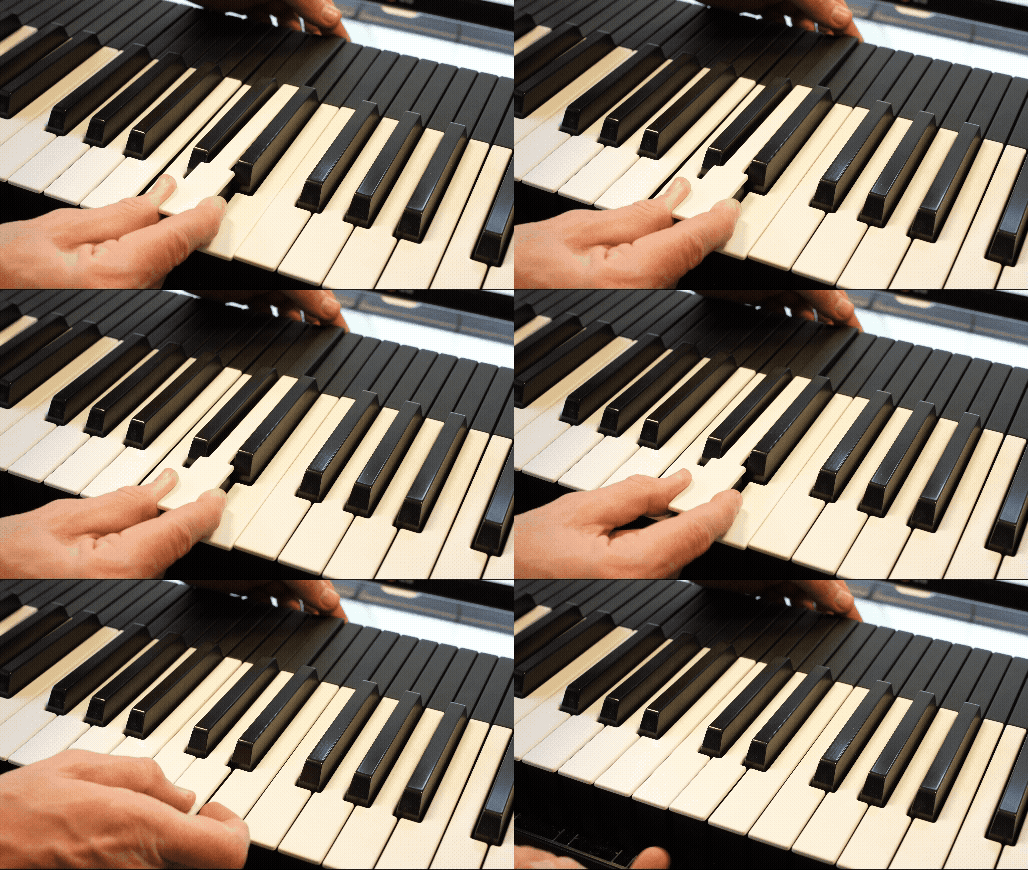
Make sure that Osmose is powered off. Place a finger of one hand at the rear end of the white key (the all-black key lever) and push the key towards you. At the front, take the key on the sides with your thumb and index finger of your other hand and pull the key towards you. You should feel a spring at the back of the mechanism, giving way a bit to the key. While pressing from behind, move the key downwards to make it hop over its so-called "limit stopper". Let go when it's at the same height as the other keys. Here's a video of the process.
⚠️Please avoid pulling up already raised keys further. This will eventually make the spring at the pivot on the back jump out of its compartment (if not happened yet). It's not causing permanent damage either, but it will make the required fix more tedious, as opening the instrument will be mandatory.
Reposition black keys or white keys that got detached completely
If a black key is concerned, or a white key has lost its spring connection at the rear pivot, it will be necessary to remove the top plate of your Osmose, so you have unobstructed access to the keybed mechanism.
☝️Please pay attention that you don't lose the detached spring that should be tumbling around inside the Osmose (CE) chassis if a key got detached.
For Osmose CE, removing the top plate is quick and requires a Torx T20 (star-head/6-lobe) screwdriver or bit. See here: How to remove the top plate of Osmose CE
For the Osmose synthesizer, removing the top plate is more tedious and requires a long Torx T10 (star-head/6-lobe) screwdriver. See here: How to remove the top plate of Osmose
Once the top plate is removed, follow this guide to put the key back into its correct place:

